> For the complete documentation index, see [llms.txt](https://docs.ceruleansonar.com/c/llms.txt). Markdown versions of documentation pages are available by appending `.md` to page URLs; this page is available as [Markdown](https://docs.ceruleansonar.com/c/sonarview/session-configurations/omniscan-+-nmea-heading-position.md).
# Omniscan + NMEA Heading/Position
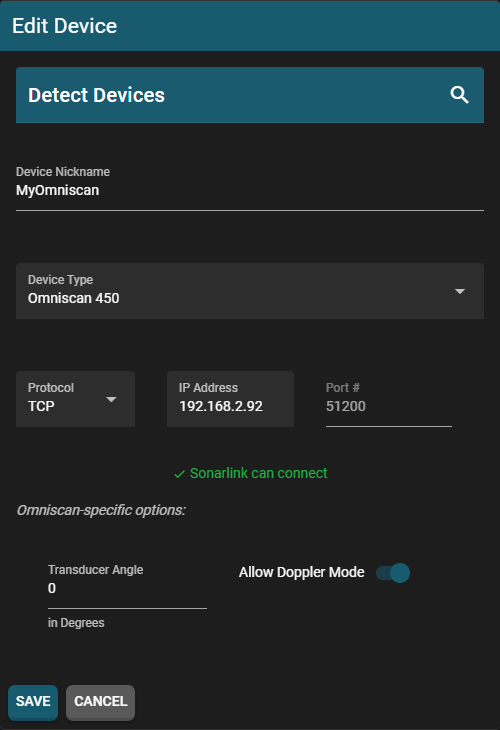
1. Add your Omiscan to the devices list:
{% hint style="info" %}
As a reminder, if the Omniscan is on your network, you can use the "Detect Devices" button to autopopulate the fields.
{% endhint %}
2. After saving, add the NMEA source as a Generic GPS Device:
{% hint style="info" %}
You can also connect to NMEA sources via UDP with IP address and port
{% endhint %}
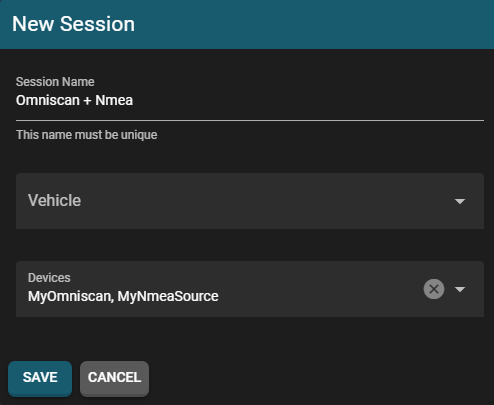
3. Add a new session with both devices:
Here's where you should be at:
With the Omniscan and gps powered and connectable, you should be able to connect to this session in discovery and use the Omniscan with heading and position.