> For the complete documentation index, see [llms.txt](https://docs.ceruleansonar.com/c/llms.txt). Markdown versions of documentation pages are available by appending `.md` to page URLs; this page is available as [Markdown](https://docs.ceruleansonar.com/c/sonarview/session-configurations/omniscan-3d-+-vehicle-position-heading.md).
# Omniscan 3D + Vehicle Position/Heading
Add your Omniscan 3D to the devices list:
{% hint style="info" %}
The Omniscan 3D has an internal IMU, so Mounting Angle just affects how the boat looks in SonarView
{% endhint %}
* Mounting Angle: Angle that the Omniscan 3D is mounted relative to the attitude source
* Mounting Offset: Position offset relative to the position source\
\
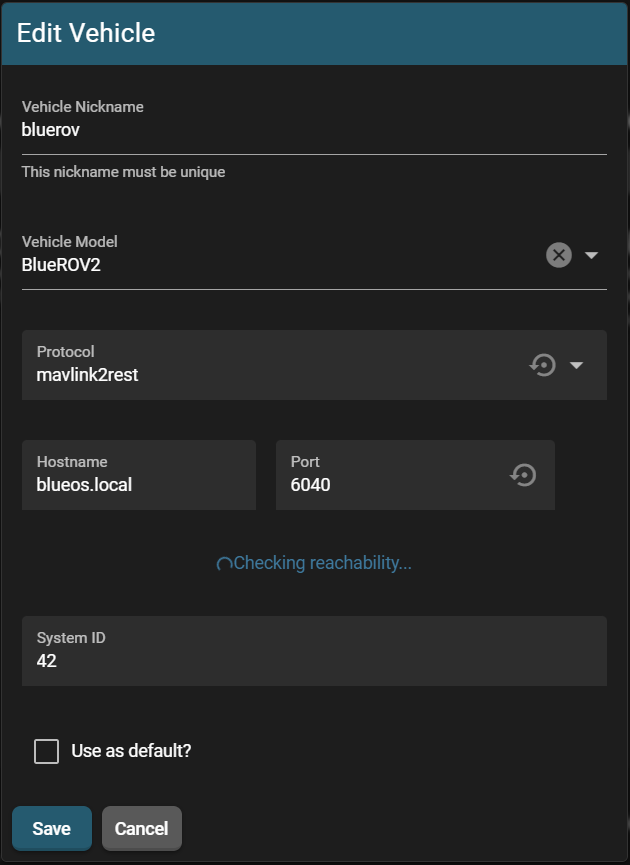
Next, add your vehicle to the Vehicles list:
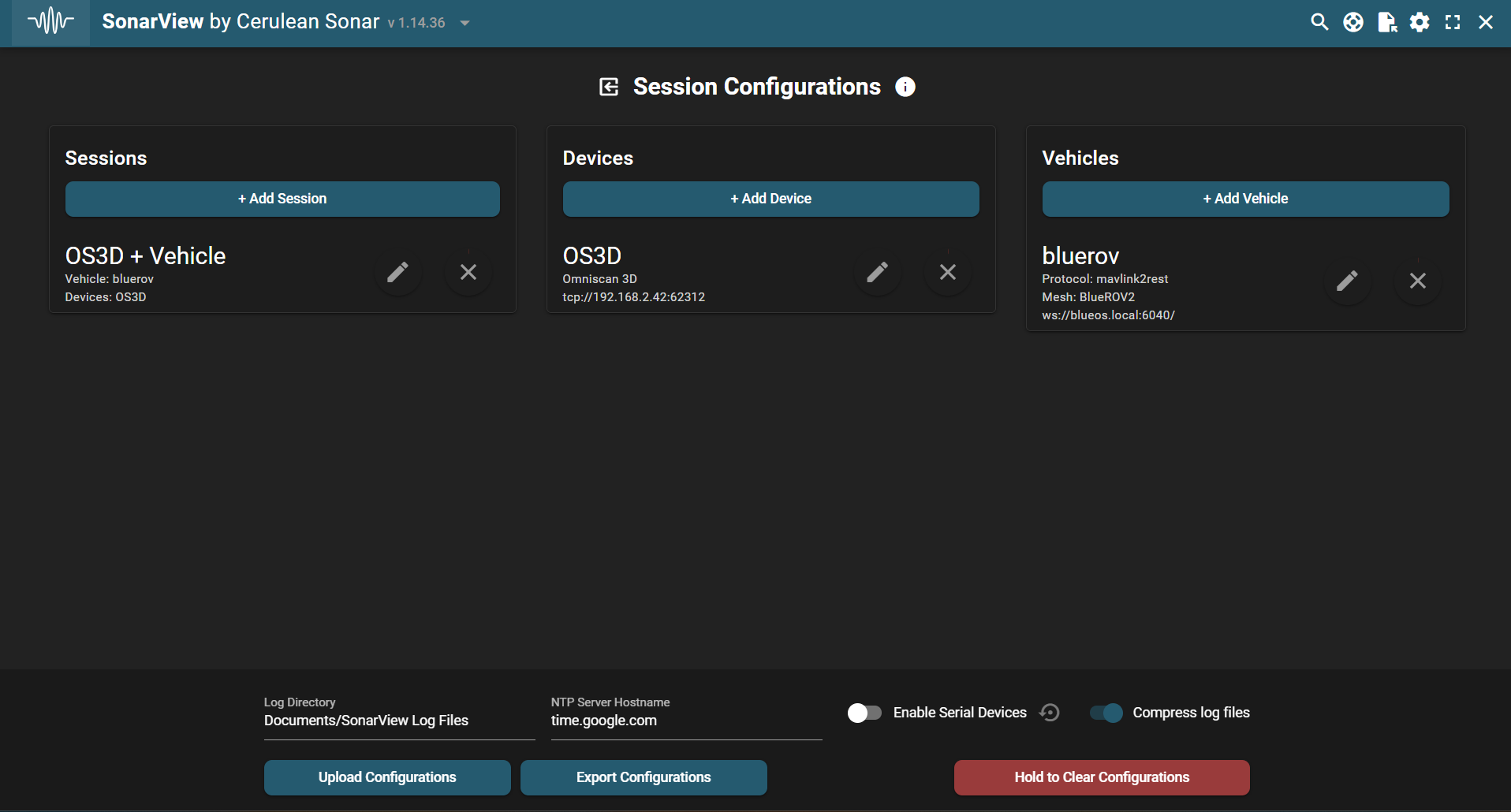
Finally, add them both to a session. Your Session Configurations page should look something like this
Once both the vehicle and the Omniscan 3D are connected, your session will appear in Discovery, allowing you to connect.